




Material guides · 5 min read ·
Soapstone Countertops: How They Age and Who They Suit
A soft, dense stone that never etches and never stays the same. The questions to answer before you choose it.
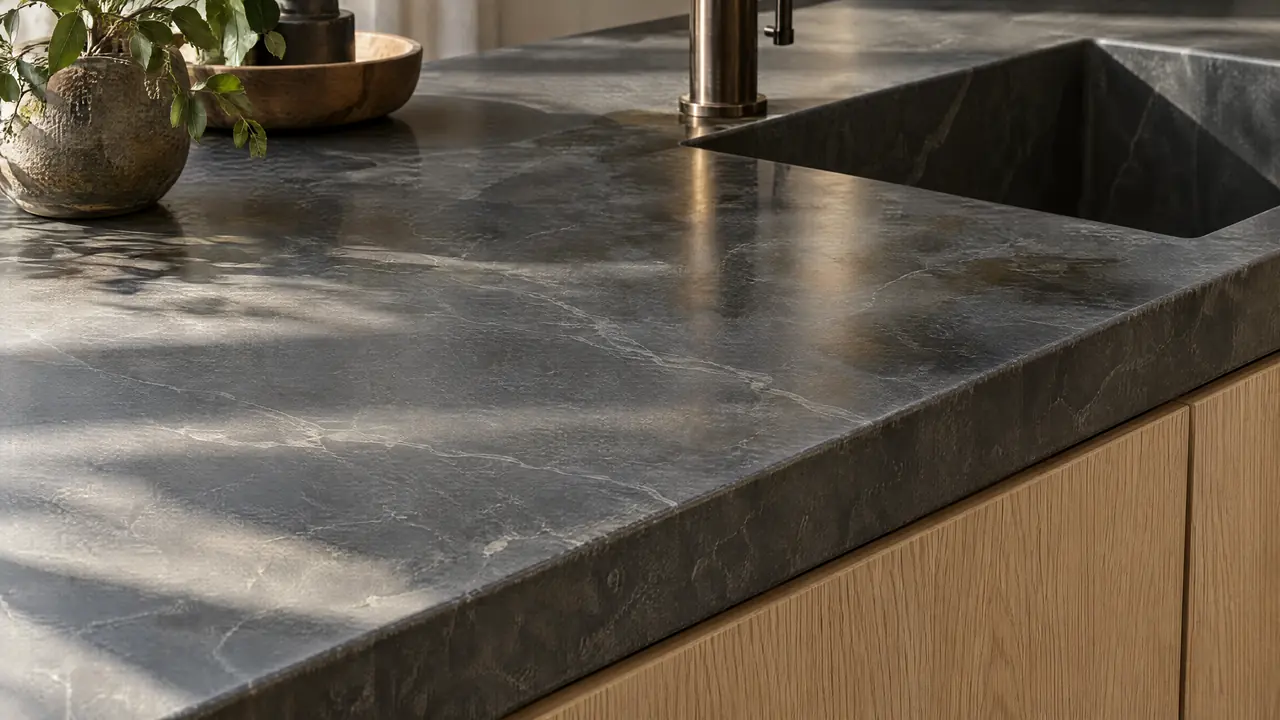
Soapstone is the countertop for people who want a kitchen to look used. It scratches, it darkens where hands and oil touch it, and it never stays the way it looked on the day it was installed. For the right owner that's the whole point. For the wrong one it's a daily irritation. These are the questions that come up most often when soapstone is on the table, answered plainly.
What is soapstone, exactly?
Soapstone is a metamorphic rock made largely of talc, the mineral that gives it a soft, slightly soapy feel, along with varying amounts of other minerals such as chlorite and magnesite. That mix is why it ranges from pale grey to deep charcoal, often with a green or blue cast and soft white or grey veins.
Not all soapstone is the same stone. Carving soapstone is very high in talc and soft enough to shape with hand tools. Architectural soapstone, the kind cut into countertops and sinks, contains less talc and is noticeably harder and denser. When you're shopping, make sure the slab you're shown is sold for countertop use.
Will it scratch?
Yes. Soapstone is much softer than granite, quartzite or engineered quartz, and keys, cast iron and ceramic bases will mark it. The difference is what happens next. Because the stone is the same color all the way through, a scratch is a shallow, light-colored line, not a chip in a coating, and most can be rubbed out with fine sandpaper and a little mineral oil. Deeper marks soften over time as the surface is oiled and used.
If the thought of a visible scratch on a new counter bothers you, soapstone will bother you. If you see marks as the record of a kitchen that gets cooked in, you'll like it more every year.
Does it stain or etch?
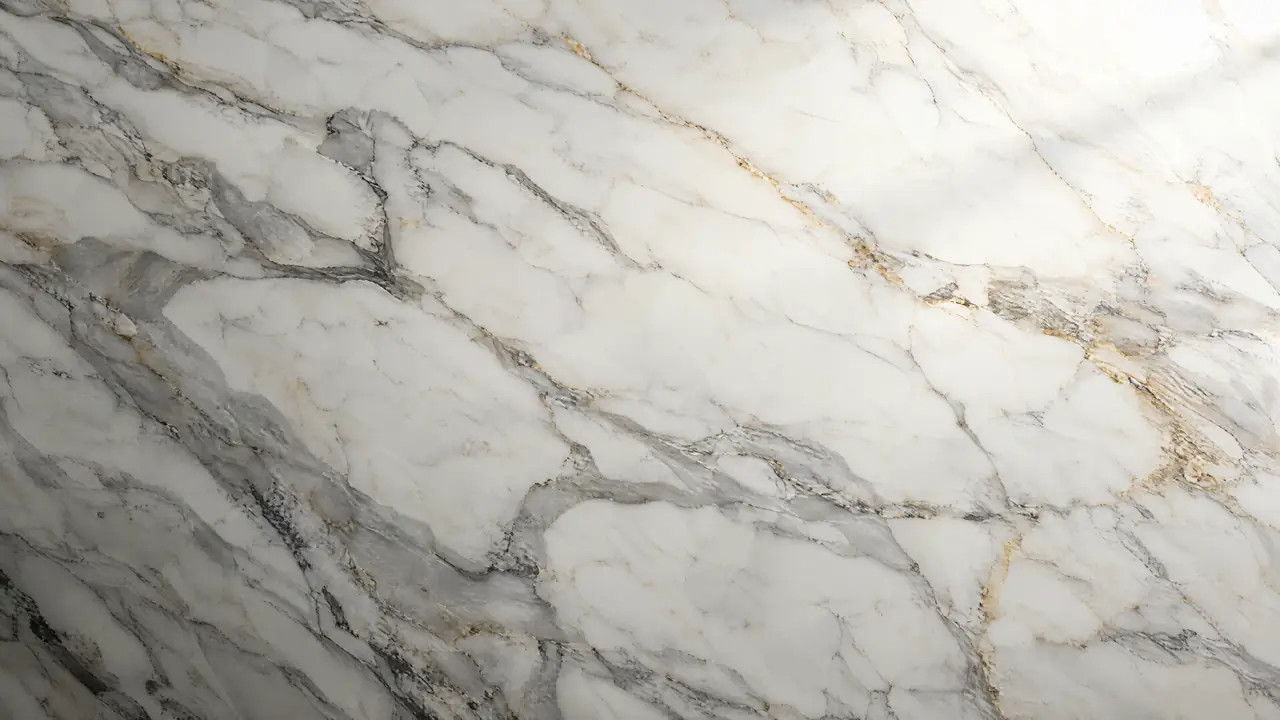
This is where soapstone earns its reputation. It's dense and not very absorbent, so oil and wine tend to sit on the surface instead of soaking deep into it. And unlike marble, it doesn't etch when it meets acid. Lemon juice, vinegar and tomato won't leave the dull marks they leave on calcite-based stone. That chemical resistance is the reason soapstone was used for laboratory benches and sinks for so long.
What it does do is darken. Oils from cooking and from hands deepen the color in the places you use most, especially around the sink and the cooktop. That uneven darkening is the patina people talk about.
| Behaviour | Soapstone | Marble | Quartzite |
|---|---|---|---|
| Scratching | Scratches easily; sands out | Scratches; harder to repair | Very scratch resistant |
| Acid (lemon, vinegar) | Does not etch | Etches | True quartzite resists etching |
| Sealing | Not needed; oil is optional | Periodic sealing | Periodic sealing |
| How it ages | Darkens and softens | Etches and develops a worn look | Changes very little |
Can I put a hot pan on it?
Soapstone handles heat well. It's the traditional material for wood stoves and masonry heaters because it absorbs heat and releases it slowly without cracking. A hot pot set down on a soapstone counter is not a problem for the stone itself. Trivets still make sense for cast iron, which can scratch, and for anything wet underneath that might leave a ring of oil.
Do I have to oil it?
No, but most people do. Mineral oil, or one of the wax-based soapstone finishes, darkens the whole surface at once so the patina develops evenly instead of in patches. New counters typically take oil more often in the first months and then much less. Leave it unoiled and the stone will darken on its own, just unevenly, where it's used. Neither approach is wrong. It's a matter of whether you want an even charcoal or a counter that shows exactly where you cook.
Who is soapstone right for?
- If you cook constantly and want a surface that shrugs off acid and heat, soapstone is one of the best natural choices there is.
- If you want a counter that looks the same in ten years as it did on day one, choose quartzite or a dense granite instead.
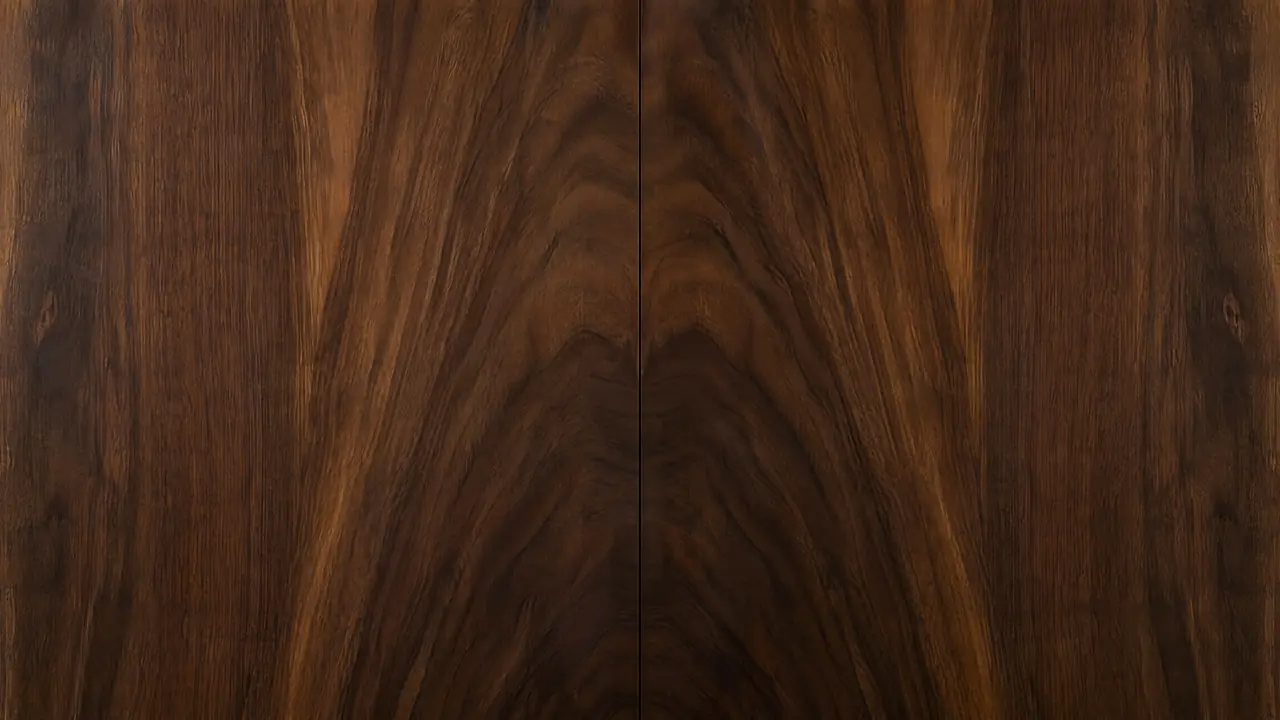
- If you're drawn to dark, matte, architectural surfaces, soapstone pairs well with white oak, walnut, plaster and unlacquered brass.
- If you want a sink in the same stone, soapstone can be fabricated into integral sinks, which suits farmhouse and workroom kitchens.
How does it look with the rest of the kitchen?
Soapstone is quiet. It reads as a single dark plane, not a pattern, so it lets cabinetry and hardware carry the detail. Against pale rift-sawn oak it gives a strong, calm contrast. With walnut it becomes darker and moodier. It's a natural partner for living finishes like unlacquered brass and bronze, which age alongside it, and for plaster or limestone on the walls. You can see how these materials sit together in our material library.
If you're still deciding between natural stones, our guide to quartzite vs. marble covers the other side of the choice. To compare samples in person, start a project or call (303) 963-9688.