



Material Guide · 7 min read ·
Quartzite vs. Marble for a Working Kitchen
Two natural stones that look alike on a showroom wall and behave very differently next to a lemon.
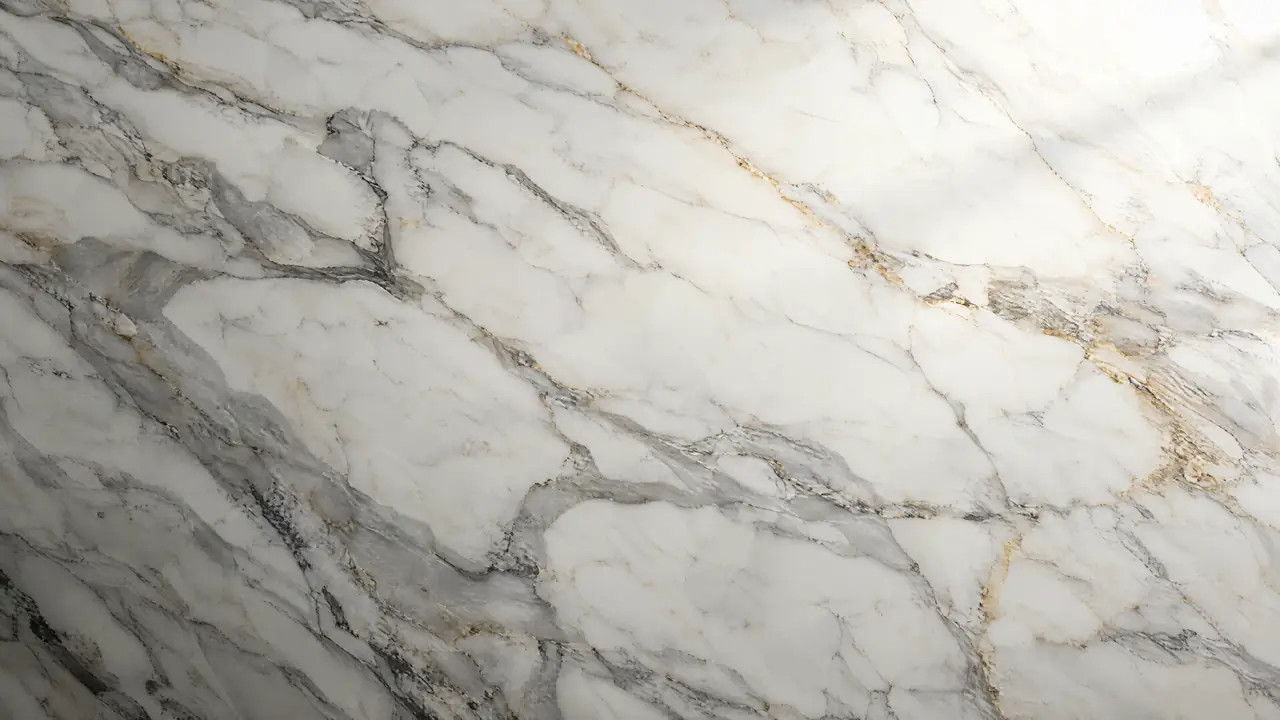
Stand a slab of Calacatta marble next to a white quartzite in a stone yard and plenty of people can't tell which is which. Both have a pale ground, both have dramatic veining, and both cost real money. Put them in a kitchen for a year, though, and they tell very different stories. This guide covers the quartzite vs. marble decision the way we'd talk it through at a sample table: what each stone is, how it behaves next to a lemon, and how to make sure the slab you buy is what the label says.
What marble and quartzite actually are
Both are metamorphic stones, formed when heat and pressure reworked an older rock. The starting point is what separates them.
Marble began as limestone. It's made mostly of calcite or dolomite, both carbonate minerals, and sits around 3 on the Mohs hardness scale. A steel knife will scratch it.
Quartzite began as quartz-rich sandstone. Its grains fused into a dense, interlocking mass of quartz, which rates about 7 on the Mohs scale, harder than steel and harder than most granite.
That one difference, carbonate against silica, drives almost everything that follows.
| Property | Marble | Quartzite |
|---|---|---|
| Main mineral | Calcite or dolomite | Quartz |
| Mohs hardness | About 3 | About 7 |
| Acid etching | Etches with citrus, vinegar, wine | Resists acid (true quartzite) |
| Scratching | Scratches with steel | Scratches glass, resists steel |
| Staining | Porous; seal regularly | Varies by stone; most benefit from sealing |
| Fabrication | Easier to cut and profile | Harder on tooling; simpler edges suit it |
| How it ages | Develops a soft, lived-in patina | Stays close to how it was installed |
Etching is not staining
People use the two words interchangeably, and they shouldn't. A stain is something absorbed into the stone: oil, red wine or coffee soaking into the pores. Sealing helps a lot with staining, on both stones.
An etch is a chemical reaction. Acid dissolves a thin layer of calcite and leaves a dull spot, or on polished marble, a ring where the shine has gone. No sealer prevents it, because the reaction happens with the stone itself. Lemon juice, vinegar, tomato sauce and many cleaning products will etch marble. True quartzite simply doesn't react.
The quartzite that isn't
This is where buyers get caught. Some stones sold as quartzite are really dolomitic marble, or a marble-quartzite mix, and the trade sometimes calls them "soft quartzite." They look the part and they price like quartzite. Then they etch.
Where each stone works best
- If the kitchen is a working kitchen with daily cooking, kids and citrus, true quartzite gives you the look of natural stone without the etching.
- If you want a counter that records its history and you enjoy a patina, honed marble is beautiful and very forgiving visually.
- If you want marble but worry about the island, consider quartzite on the island where the cooking happens and marble on the perimeter or backsplash.
- If you love a sharp, sculpted edge profile, marble machines more easily. Quartzite suits simpler eased or mitered edges.
A word on quartz, which is different again
Engineered quartz is not quartzite. It's crushed quartz bound with resin and pigments, made in a factory. It's consistent and non-porous, but the resin is the weak point: it can scorch under a hot pan, and many manufacturers don't warrant it for strong direct sunlight, since UV can discolor some resin-based surfaces over time. In a Colorado kitchen with big west-facing glass, that's worth checking in the warranty before you choose it.
Care, in practice
Both stones are easy to live with once you know their rules. Wipe spills promptly, especially oils and acids. Use a pH-neutral stone cleaner; many general kitchen sprays are acidic or alkaline enough to dull marble. Reseal on the schedule your fabricator recommends, which depends on the specific stone. The water-drop test is a good guide: if a few drops darken the stone within a few minutes, it's time.
Stone selection is one part of a larger set of decisions. See how stone, timber and metal work together in our material library, or read about how the counter fits into the plan in custom kitchen design. If you're weighing slabs for a specific project, tell us about it.