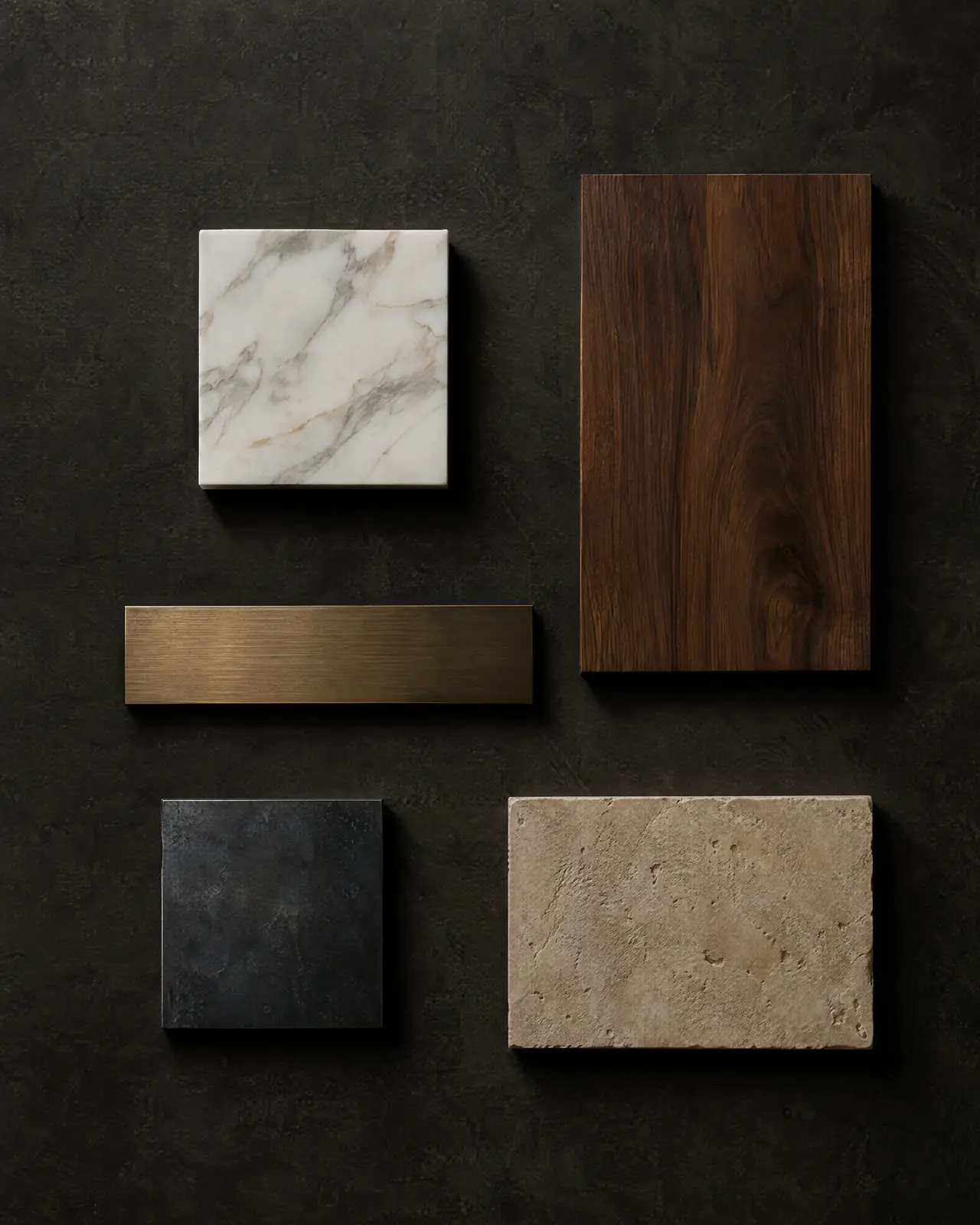
Kitchen materials & finishesMateriality

A digital library of the stone, timber, metal and finishes we work with, described the way we'd describe them across a sample table: how each one looks, how it behaves and how it ages.

The library

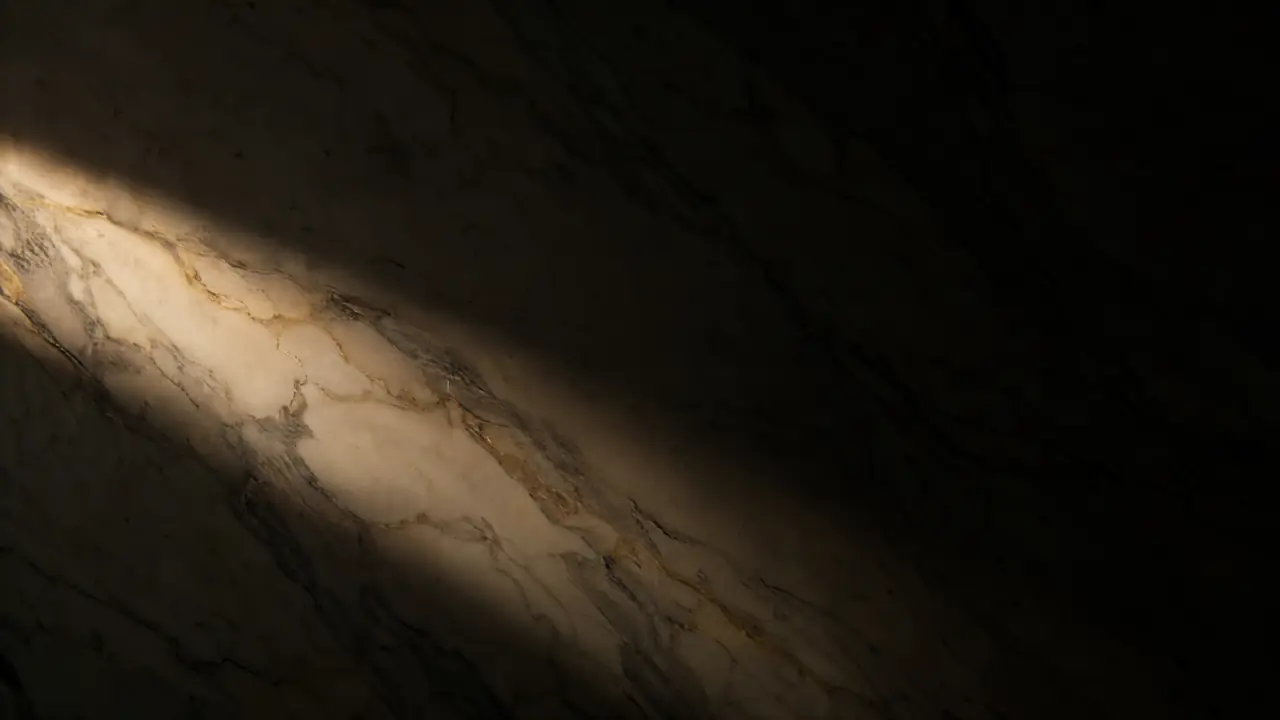
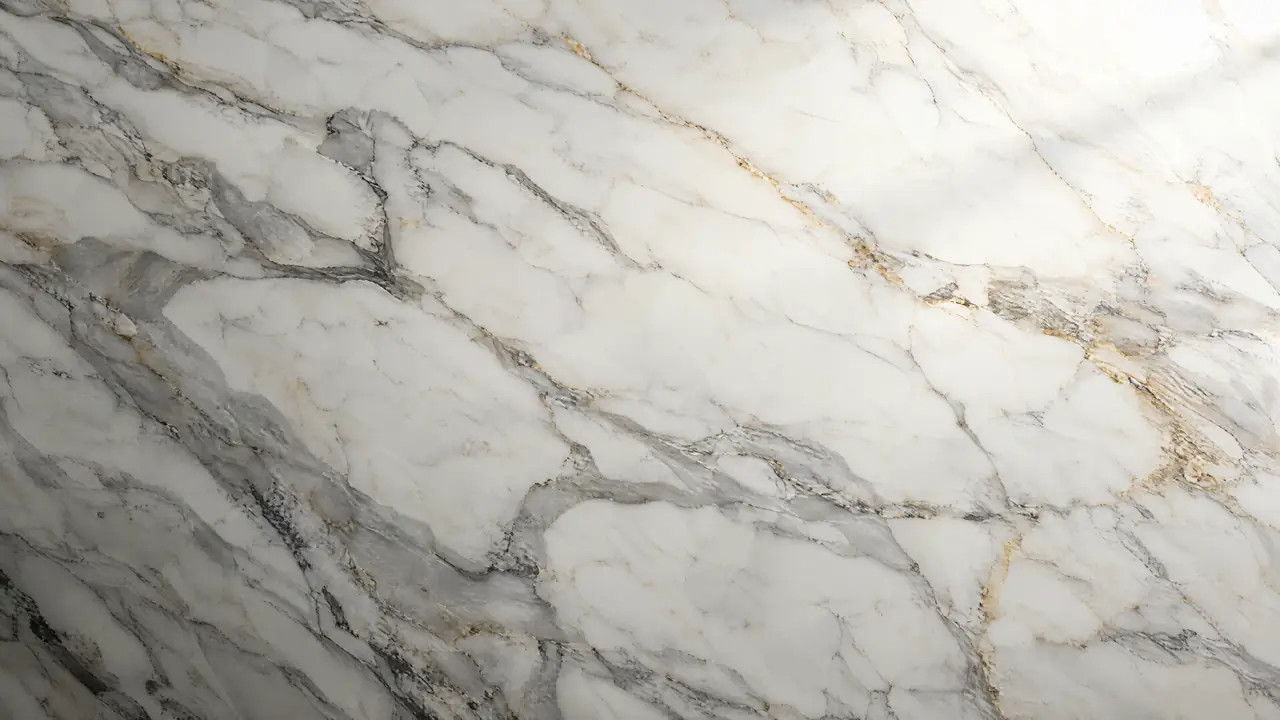
Calacatta Marble surface detail

Calacatta Marble

The benchmark white marble. Bold grey veining on a warm ground, quarried in the mountains above Carrara. It etches when it meets lemon, wine or vinegar, so the question is never whether it will mark, only whether you will enjoy how it ages.

Origin
Apuan Alps, Tuscany
Hardness
About 3 on the Mohs scale
Acid
Etches
Best finish
Honed hides etching better than polished

Material explorer

See how kitchen finishes work together

Materials are never chosen alone. Change the cabinet, stone and hardware below and judge the combination as a whole elevation, the way it will actually read in the room.

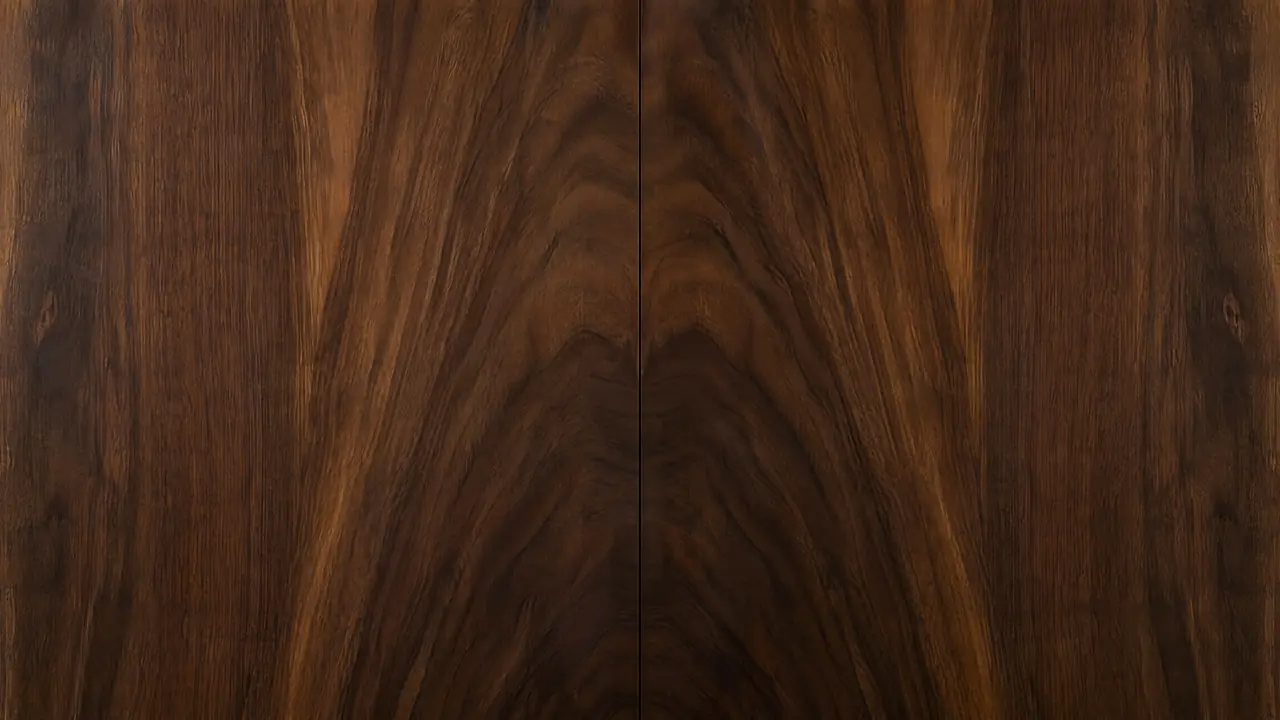
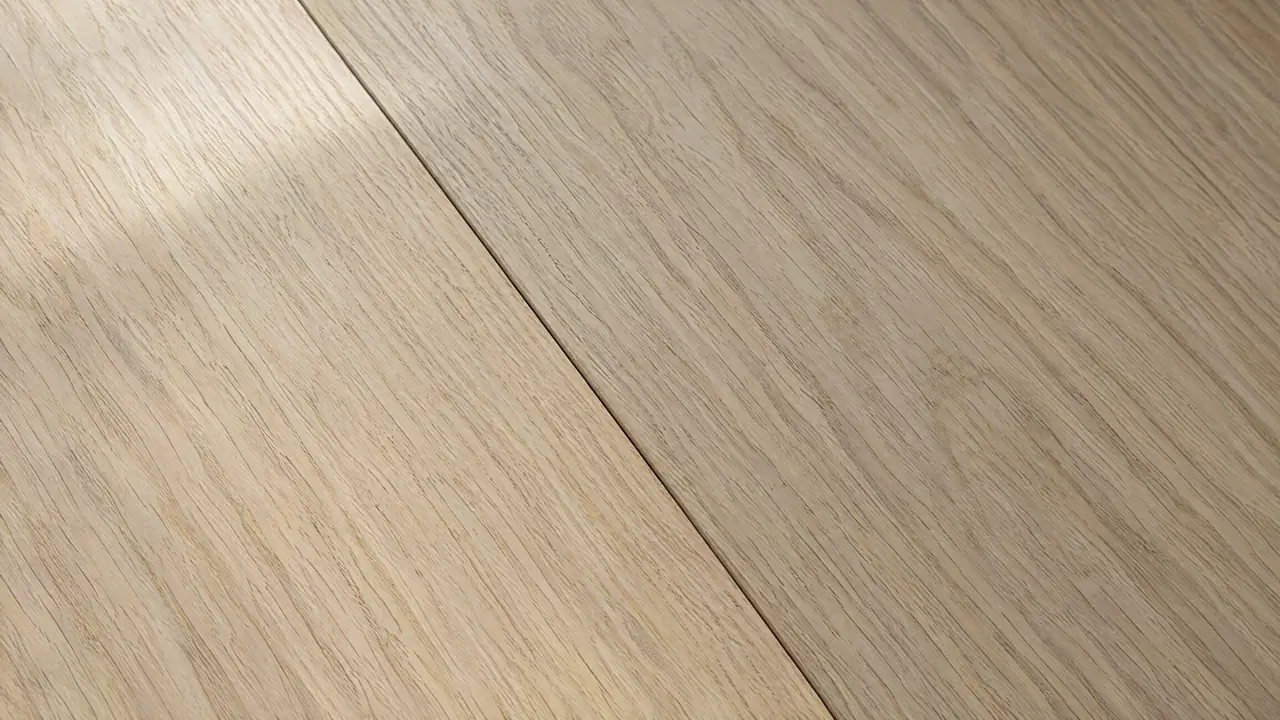
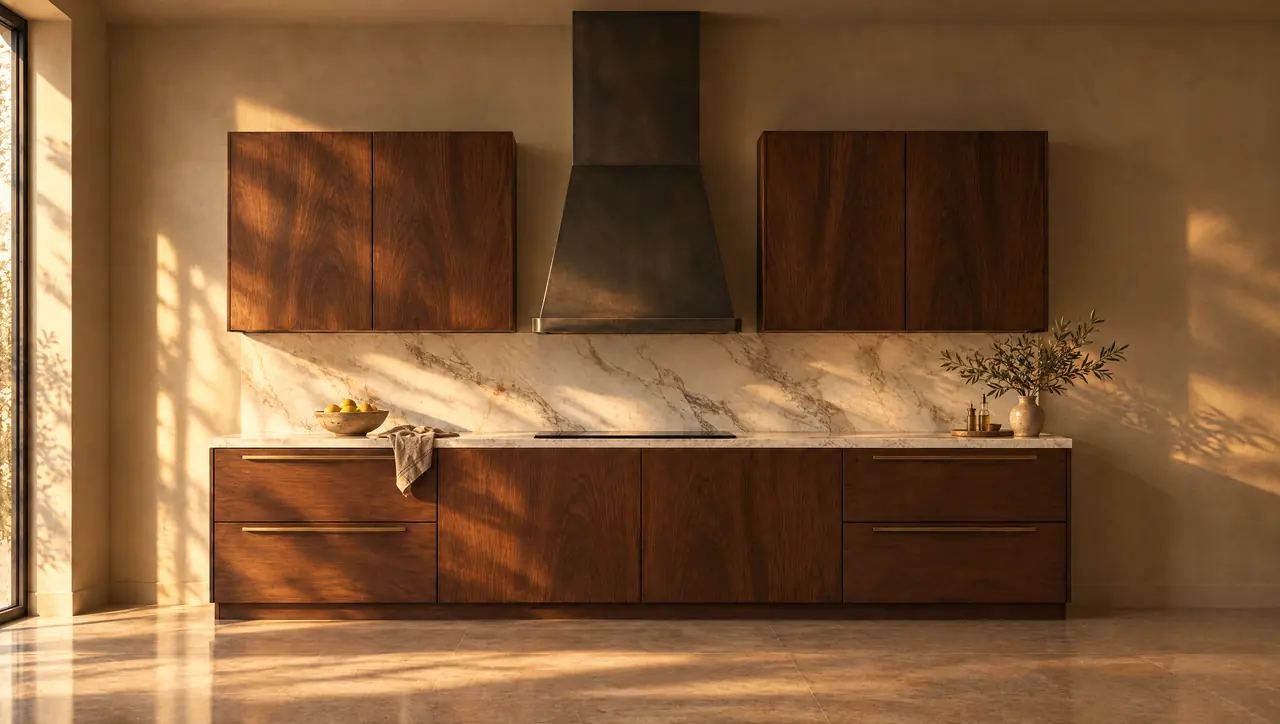
American Walnut · Calacatta Marble · Brushed Bronze

Cabinet
Stone
Hardware

How to choose kitchen materials that age well

A finished walnut and marble kitchen in evening light, lived inConcept visualization
01 / 04

The most useful question about any kitchen material isn't how it looks on day one. It's how it will look in year ten, after thousands of meals, a few accidents and a decade of Colorado sun. Every material in the library ages. Some gain character; some just wear. The choice is about which kind of aging you'll enjoy.

Match the stone to the cook

Marble and limestone are calcium carbonate, so acids etch them. Quartzite and granite are largely silica and shrug acids off. If you cook with citrus and wine every night and want a counter that looks untouched, choose quartzite. If you like a surface that records life in the kitchen, honed marble is wonderful, and honing makes the etching far less visible.

Plan for light and altitude

Ultraviolet intensity climbs roughly 10 percent for every 1,000 meters of elevation, according to the World Health Organization, and Erie sits around 1,550 meters. Walnut lightens under UV and some painted finishes shift too. Large west-facing windows can be specified with UV-filtering glass, or the finish choice can account for the change.

Keep metals deliberate

A kitchen reads calmer with one dominant metal and, at most, a second in a supporting role. Living finishes like unlacquered bronze and blackened steel change with use, so put them where hands go and where you'll enjoy the patina.

Material choices connect directly to custom cabinetry construction and to the overall kitchen design. When you're ready to see real samples, start a project.


Material questions

01Is quartzite better than marble for a kitchen countertop?

For durability, true quartzite is harder and far more resistant to acid etching. Marble is softer and etches, but many people choose it for exactly the way it ages. Our quartzite vs. marble guide walks through the trade-offs.

02What is the difference between honed and polished stone?

Polished stone has a reflective surface that intensifies color and veining. Honed stone is ground to a matte finish. On marble, honing makes etch marks far less visible, because there is no shine for them to dull.

03Does walnut change color over time?

Yes. American black walnut lightens gradually with ultraviolet exposure, moving from deep brown toward a warmer, honey tone. UV levels rise with altitude, so placement near large windows deserves thought in Colorado.

04What is the difference between lacquered and unlacquered bronze hardware?

Unlacquered bronze reacts with air and skin, darkening and developing patina where it is handled. Lacquered bronze has a clear protective coat that holds its original tone until the coating wears.

Sample conversation

Hold the materials
before you choose them.